The Learning Space

Blog

Your blog category

Two-Letter-Words-for-Kids-in-English
Blog

Two Letter Words for Kids in English

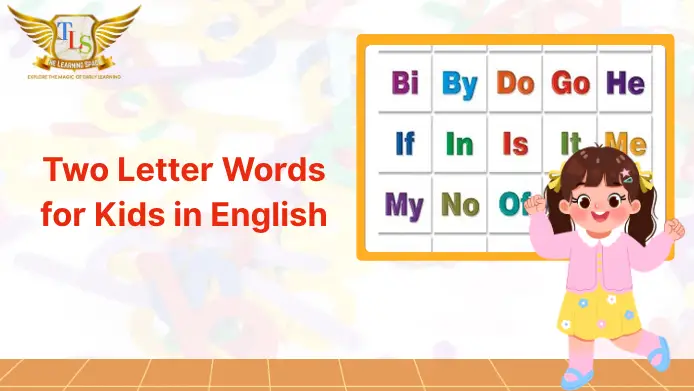
Learning to read is just like constructing a building. You begin with small building blocks. Two letter words form the initial building blocks for kids. Let us discuss how such small words can play an important role. What Are Two Letter Words in English? As you have guessed, two letter English words are basically words that consist of two letters only. Two letter words are formed using combinations of vowels and consonants.  Benefits of Learning Two Letter Words Learning two letter words in English can give your child a great head start. Here are five great benefits of learning them every day. Top 25 Most Common Two-Letter Words in the English Language Here’s a list of words that should be taught first to your kid. These are short, frequent, and enjoyable to learn. Two Letter Word Example Sentence am I am happy. an She has an apple. as He runs as fast as me. at We are at school. be Always be kind. by Sit by me. do Please do your homework. go Let’s go home. he He is my brother. hi Hi, how are you? if If it rains, stay inside. in The toy is in the box. is This is my book. it It is a cute puppy. me Please help me. my This is my bag. no No, thank you. of A cup of milk. oh Oh, that’s wonderful! on The book is on the table. or Tea or coffee? so I was tired, so I slept. to We walked to the park. up Look up at the sky. us Please join us. we We are friends. Tips for Parents to Teach Two Letter Words The learning process should be enjoyable. Follow these simple tips to ensure that all your everyday lessons are fun, easy, and relaxing. Conclusion Two-letter words help your child begin their reading journey. In case you wish to give your child a conducive environment, opt for the best Preschool in Noida. A good Daycare in Noida will ensure that your child enjoys an exciting daily learning process. FAQ’s of Two Letter English Words At what age should my child start learning two-letter words?  Children are usually ready to learn two-letter words between the ages of three and four. Once they learn the letter sounds, they can begin reading two-letter words.  How many two-letter words should a preschooler know? A preschooler should know about 15 to 20 words. This is adequate preparation for kindergarten. What comes after two-letter words? After these words, the children learn three-letter words, which are normally consonant-vowel-consonant words, such as cat, dog, and sun. Can two-letter words help with sentence building? Yes, words such as “it,” “is,” and “on” will help children form sentences such as “It is on.” Can two letter words be verbs in English? Yes, words such as do and go are action words and hence verbs.

Fun-Shape-Activities-for-Preschoolers
Blog

Fun Shape Activities for Preschoolers

Learning shapes opens a whole new world for your kid. Here are the top simple activities using shapes to help your children learn in a fun way! Top 10 Types of Shapes for Preschoolers Little ones can learn about so many exciting shapes! Let us see what the top ten shapes are for preschoolers to discover in their everyday life. Why Are Shapes Activity Important for Preschoolers? Playing shape games for preschoolers is not only fun and entertaining. Such activities contribute to the development of a child’s thinking and learning skills through engaging games. Fun Shape Games for Preschoolers You do not need fancy toys to teach shapes. Try these easy and fun shape activities with your child at home today. Tips to Guide Shapes to Preschoolers Effectively Learning about shapes should be an entertaining activity. Follow these easy tips to make learning joyful and smooth for your child. Conclusion Shapes are everywhere around us. If you want your little one to learn through play, choosing the right Preschool in Noida is important. A good Day care in Noida provides a safe environment and learning toys to support children’s daily development.  FAQ’s of Fun Shape Activities for Preschoolers What are the shape game concepts for preschoolers? Children learn to name simple shapes, to count sides of shapes, and to see them around in nature. Children learn to sort and match various shapes. What age should children start learning shapes? The age at which children start learning about shapes varies depending on the individual. However, children can start learning basic shapes when they are about two years old. What are the easiest shapes for preschoolers to learn first? There are several types of shapes, but circles and squares are the simplest for children to learn first. These shapes have very distinct features. How do shape games improve a child’s learning? Playing games with shapes actively engages the child and makes learning interesting. Games promote concentration, listening skills, and comprehension of the surrounding environment. Can shape games increase the abilities of memory and concentration? Absolutely, the process of matching and sorting shapes develops kids’ memory and concentration.

Blog

10 simple sentences for kids in English

Children enjoy it when they learn a new language. Starting with simple words and sentences makes language learning fun, engaging, and stress-free for children. Small words can bring big confidence in children. Let’s explore how. What are Simple sentences for kids in English? One kind of simple sentence for kids in English means that probably a sentence is very short and only contains one phrase for expressing a whole thought or feeling. On the other hand, it’s also short and easy to understand. Usually, a simple sentence contains just one independent clause. Why is it Important to Teach Simple English Sentences to Kids? 1. Creates a Strong Base for Language Like building blocks, short sentences give your child the support they need. They allow children to understand initially how words are combined correctly. 2. Builds confidence in speaking As soon as kids can express themselves with a complete sentence without difficulty, a sense of achievement is created within them. This will drive them to engage more in communication and learn new words. 3. Improves vocabulary and comprehension Naturally Children get to know new words at a rapid pace as they come across them within a compact context. They get to understand the essence without having to cram through grammar stifling them. 4. Supports social development Verbalizing a clear idea enables children to communicate with friends and teachers. Besides, team playing becomes very enjoyable and easier. 5. Encourages Everyday Communication Simple lines convert English into an ordinary part of life. Children start speaking the language very spontaneously at home, at school, and during playtime. List of Simple sentences for kids in English to practice daily On a day-to-day basis, equip your children with these simple expressions that are very easy to use. 10 Simple Sentences for kids in English About Yourself With these straightforward sentences, you can assist your child in expressing their emotions and what they can do. 10 Simple Sentences for kids about Daily Routines at Home Use these lines to talk about daily habits from morning until bedtime. 10 Simple Sentences for Kids to Describe Their School These phrases are perfect for sharing the fun things that happen in the classroom. 10 Simple Sentences for kids About Family Members Let your child express love and respect for the people closest to them. 10 Simple Sentences for kids About Friends Great relationships start with kind words, and these sentences capture that bond. 10 Simple Sentences in English for Kids about Nature and Environment Teach your little ones to look around and describe the beautiful world outdoors. 10 Simple English sentences for kids about Good Habits Good manners are vital, and these phrases remind children to behave beautifully. 10 Simple English sentences for kids about Animals Kids love creatures, making these animal-themed lines excellent for regular speech practice. 10 Simple Daily Practice English sentences in English for kids Boost your child’s mood and self-belief with these positive daily reminders. 10 Simple Polite Sentences in english for Everyday Use These polite phrases help children speak kindly to everyone they meet. How to Teach Simple Sentences in English to Kids We should always keep teaching language to kids like a fun playtime game. A great way to do this is by mixing kids’ word cards, and together you can build sentences. This keeps the children learning and very much engaged. 1. Turn Sentence Building into a Game Mixing the word cards and then asking your child to put them in order is a nice idea. This way learning will be active and really motivating. 2. Use Pictures for Better Understanding Point to an object, like an apple, and say a short sentence about it. Pictures make children immediately link words and the reality. 3. Try Role-Play Activities Let your child pretend to be a shopkeeper or a teacher in a play. This helps them practice real-world conversations while having fun.  4. Practice Fill-in-the-Blanks You say almost the whole sentence, and your child finishes the last one. It is a smart exercise that kids won’t find exhausting or stressful. 5. Use Flashcards for Practice Want to quickly show words and actions? Flashcards have it all, fast, bright, and visual for review purposes. How Parents Can Practise Sentences at Home You do not have to rely solely on a traditional classroom to help your kid become a wonderful speaker. Conclusion Children’s use of simple sentences can be very helpful in making their process of learning English the easiest possible. If you need a top preschool in Noida or a friendly day care in Noida, find places that use such simple and gentle methods. With a loving touch and a daily routine, your little star will be speaking beautifully in the blink of an eye! FAQ’s of Simple Sentences for kids in English Are Simple sentences for kids useful for spoken English? Definitely, yes! They provide children with a well-defined sequence of steps that guide them to communicate their ideas effectively and speak confidently without any fear of making mistakes. What is the most suitable age to begin teaching small & simple sentences in English? It’s possible to start from as early as two or three years of age. At this time, children pick up spoken language very efficiently, almost like little sponges. How do The Learning Space School’s teachers assist children in learning English in a natural way? Our amazing teachers rely on fun games, excellent storybooks, and everyday conversations to embed language learning into children’s play. How Many English Sentences Should My Child Learn Daily? Learning only two or three simple English sentences for kids each day will be just fine. It is consistency that counts much more than speed!

5-Stages-of-Child-Development-by-Age
Blog

Understanding the 5 Stages of Child Development by Age

What is Child Development Child development refers to the ways in which a child essentially changes from infancy to adulthood physically, mentally, emotionally, and socially. It’s during these years that children acquire the necessary skills to navigate life successfully. A good grasp of child development can greatly inform us on the ways to offer children the best beginnings in life. The 5 Large Phases of Child Development Children develop through five general stages of child development that determine their personality and nature as individuals. 1. Newborn (Time from Birth to 2 months) This is an incredibly significant period when your baby is only gradually adapting to the outside world. They mostly sleep, eat, and keep craving your cuddles. 2. Infant (3 to 12 months) It’s during this period that your baby embarks on discovering the world around him more than ever. They become very active and curious about everything around them.  3. Toddler (1 to 3 years) This stage of child development is one of the most thrilling ones because toddlers are constantly moving and exploring. They are becoming independent and want to do everything “by myself.” 4. Preschooler (3 to 5 years) Children at this stage are all about using their imagination. They constantly bombard you with “Why?” questions and pick up new information at lightning speed. 5. School-going age (6 to 16 years) Of all the segments of child development stages, this one lasts the longest, and here the emphasis is on school and peers. Physically, mentally, and emotionally, children at this stage develop and learn a lot about the world around them. Conclusion Each child is different and develops in their own time. Opting for a quality preschool in Noida or a reliable daycare in Noida can not only accompany them but also guide them effectively through these 5 stages of child development. Shower them with affection, love, and care; their light is bound to sparkle! FAQ’s of the 5 Stages of Child Development What factors affect child development? Many things matter, like a loving home, healthy food, and genes. Growing up in a safe space where they can play and learn helps them the most.  How can parents support healthy child development? Spend time reading, playing, and talking with your child. Showing them love and setting simple rules will make them feel safe. Your showing them love and the setting up of kind and fair rules can be the way for them to feel safe and happy. What are developmental milestones in children?  A milestone is a skill that the child usually possesses by a certain age. It includes first-time activities such as first steps or first words. Does every child develop at the same pace?  No, not at all! Every child is unique. For instance, some kids might walk earlier, whereas others might talk first. It is quite natural for children to develop differently. How does play contribute to child development?  Play is learning! Firstly, it helps kids in thinking & problem-solving. Secondly, it is a way of getting their body moving. And lastly, it is an arena in which they learn social skills. What role does nutrition play in child development?  Good nutrition is a good source of energy that enables kids to perform multiple activities that lead to growth and learning. Proper nutrition also contributes to brain development and overall fitness.

alphabet activities for kids
Blog

Fun Alphabet Activities for Kids

Learning letters marks the primary step in exploring reading. Besides just learning sounds when kids play with letters, they are actually cultivating a love for books. The application of alphabet activities for children can be a great help in making this journey the most pleasant one. How about making letters meet life? Let’s try it! Benefits of Alphabet Activities for Kids Engaging kids in alphabet activities not only instills the knowledge of letters but also mentally enhances the child’s capabilities. It is memory development and shape recognition at the same time. Children who get involved in tactile letter play tend to retain the learned material much longer. Moreover, it raises their self-esteem. It doesn’t seem like a “class” but rather a “game.” Therefore, they look forward to learning more. Fun Alphabet Activities for Nursery kids 1. Alphabet Coloring Fun Give the kid big letters to color. Use crayons or markers. This helps them see the unique shape of every letter while having fun with alphabet colors. 2. Sand or Salt Tray Writing Put salt or sand into a tray. The kid attempting to trace a letter with the finger is fun, and the best part is that it can be easily erased and done over again. 3. Alphabet Flashcard Games Show a card and say, “Identify this letter!” Besides this, you can both hide the letters in the classroom and ask your kid to bring to you the “B” letter card. 4. Letter Matching Game Put a letter on the sticky notes. Your child will be asked to find the same letter in a book or on a poster and stick the sticky note to it. 5. Alphabet Songs and Rhymes Music is magic. When kids sing the ABC Song, it becomes a natural, fun way to memorize the order of letters. 6. A to Z Object Hunt Tell your kid to come up with a word that begins with A (Apple) and B (Ball) from the house stuff present around them. Alphabet activities that include A to Z are the best ones, after all. 7. Match Uppercase and Lowercase Letters Introduce the concept that letters have “mamas” and “babies.” With their help match the big “A” to the small “a.” 8. Alphabet Puzzle Time A great way to learn through play is letting kids put together puzzles where visually lines and curves are fitted to form a character. 9. Chalkboard or Whiteboard Practice Fumbling with chalk is an enjoyable way to indulge the senses. Besides, if the letters seem a bit crooked at first, that’s perfectly fine! 10. Alphabet Hopscotch First outline different letters within the squares. Then instruct your kid where to jump. “On the G or M.” These moves will get you both moving! 11. Sticker Alphabet Activity Give them a sheet of stickers. Have them outline a big letter by placing stickers along the lines. 12. Storytelling with Alphabets Letter S can be the slithering snake, and Letter H can be the happy house. This way of story-making with alphabets is quite a fun challenge to students. 13. Alphabet Craft Activities With materials like paper and glue, you can create different animals that look like the letters. It’s a cat for “C” and it’s a dog for “D.” 14. Letter Sorting Game Take plastic letters and throw them in a bowl. Now, tell the little one that the letters are to be all separated for the circles while the rest with straight letters would be in another pile. 15. Digital Alphabet Games Tablet apps that are simple can entertain with shiny colors and sounds that make alphabet activities quite resemble cartoons. Tips to Make Alphabet Learning More Engaging Common Mistakes to Avoid while Teaching Alphabet activity Don’t rush. Don’t worry if they forget a letter. Avoid making it feel like a boring test. If they are tired, stop and play later. Conclusion It is important not to get stressed by learning letters. With a simple alphabet activity for nursery kids, you can create a fun learning environment at home. FAQ’s about A to Z Alphabet Activities for Kids What is the activity for teaching alphabet sounds? “I Spy” is great. Say, “I spy with my little eye something starting with the Buh sound.” How do you play the alphabet game? You can take turns naming an animal or food for every letter from A to Z. How to teach letter sounds to struggling students? Use “Phonics.” Focus on the sound the letter makes (like Sssss for S) rather than just the name. How do A to Z alphabet activities help in learning? They make a link between letter image, sound, and object, which eventually aids in memory. What is the best age to start alphabet activities? At most ages between 2 and 3, children can start enjoying such games. You can start as soon as kids show interest in signs and books.

Action words for kids
Blog

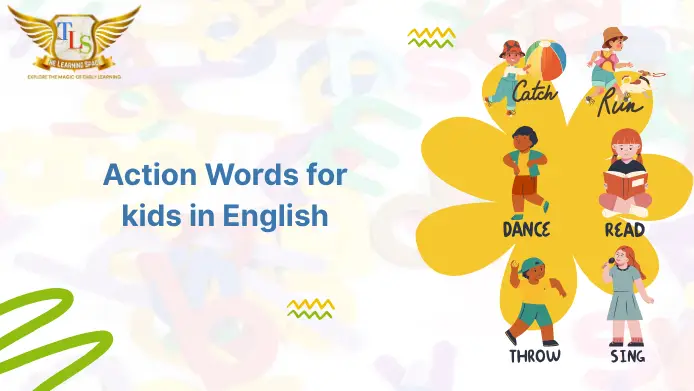
Action Words for Kids in English

Ever considered how we let people know what we are doing? It doesn’t matter if we are leaping like a frog, munching on a delicious snack, or imagining a dream at night; we use specific words to express these movements. These words are called verbs or action words.  What are Action Words for Kids? What are action words for kids? It is very simple! An action words in English describes what a person, an animal, or even a thing is doing. For instance, when you “clap” your hands or “wish” for a toy, you are using action words in English. Your teacher at school may also refer to these Action words as “verbs.” Benefits of Learning Action Words In English Early Introducing kids to these Action words early on can help them develop in various ways: 100 Action Words in English with sentences To help you get started, here is a helpful action words list. These are 100 action words in English with sentences written in very simple English. No. Action Words Sentence 1 Run I run every morning. 2 Eat She eats an apple daily. 3 Drink He drinks water after exercise. 4 Walk They walk in the park. 5 Read I read a book at night. 6 Write She writes in her diary. 7 Speak He speaks English fluently. 8 Listen We listen to music together. 9 Watch I watch movies on weekends. 10 Play Children play in the garden. 11 Cook She cooks delicious food. 12 Clean He cleans his room daily. 13 Jump The dog jumps high. 14 Sit Please sit here. 15 Stand They stand in a line. 16 Open She opens the door. 17 Close He closes the window. 18 Drive I drive to work. 19 Ride She rides a bicycle. 20 Swim They swim in the pool. 21 Sing She sings beautifully. 22 Dance We dance at parties. 23 Laugh He laughs loudly. 24 Cry The baby cries at night. 25 Smile She smiles at me. 26 Help I help my mother. 27 Teach She teaches English. 28 Learn I learn new words daily. 29 Build They build a house. 30 Draw He draws a picture. 31 Paint She paints a wall. 32 Cut He cuts vegetables. 33 Break She breaks the glass. 34 Fix I fix my bike. 35 Buy She buys groceries. 36 Sell He sells fruits. 37 Give I give him a gift. 38 Take She takes a photo. 39 Bring He brings food. 40 Carry She carries a bag. 41 Push He pushes the door. 42 Pull She pulls the rope. 43 Throw He throws the ball. 44 Catch She catches it easily. 45 Kick He kicks the ball. 46 Climb She climbs a tree. 47 Dig He digs a hole. 48 Plant They plant trees. 49 Water She waters the plants. 50 Grow Plants grow fast. 51 Sleep I sleep early. 52 Wake She wakes up early. 53 Wash He washes his hands. 54 Brush She brushes her teeth. 55 Wear He wears a jacket. 56 Change She changes clothes. 57 Travel We travel often. 58 Visit They visit grandparents. 59 Enter He enters the room. 60 Leave She leaves early. 61 Start I start my work. 62 Stop He stops the car. 63 Turn She turns left. 64 Move They move quickly. 65 Wait I wait for the bus. 66 Call She calls her friend. 67 Answer He answers the phone. 68 Ask I ask a question. 69 Reply She replies quickly. 70 Think He thinks deeply. 71 Know I know the answer. 72 Understand She understands the lesson. 73 Forget He forgets his keys. 74 Remember I remember your name. 75 Believe She believes in herself. 76 Hope We hope for success. 77 Love I love my family. 78 Like She likes ice cream. 79 Hate He hates noise. 80 Enjoy They enjoy the game. 81 Try I try my best. 82 Win She wins the match. 83 Lose He loses the game. 84 Work I work hard. 85 Rest She rests after work. 86 Plan We plan a trip. 87 Decide He decides quickly. 88 Choose She chooses a dress. 89 Create He creates art. 90 Design She designs clothes. 91 Improve I improve my skills. 92 Practice She practices daily. 93 Share He shares his food. 94 Save I save money. 95 Spend She spends wisely. 96 Protect He protects his family. 97 Support We support each other. 98 Follow She follows rules. 99 Lead He leads the team. 100 Achieve I achieve my goals. How to Use an Action Word in a Sentence? Using action words for kids is a lot like building with blocks. Here are five simple ideas to make your sentences very good; highlight the action words: 1. Pick Strong Action Words Replace the Action word ‘went’ with a more expressive Action word like ‘raced’ or ‘crept.’ Strong Action words in English help readers create a mental image. 2. Mix Up Your Verbs Avoid repeating the same action words over and over. For instance, if the first time you used “walk” in the sentence, for the next one, you could change it to “stroll” or “march” for a fresh and creative expression. 3. Show Feelings with Action Words Different action words can express different feelings such as happiness, anger, or laziness. For instance, skipping sounds cheerful while stomping conveys anger or frustration. 4. Combine Actions Words in One Sentence We can describe multiple actions happening at the same time. Example: I will run to the fence and touch the gate. 5. Use Different Tenses Action verbs can be used to express something Conclusion Learning action words in English is like learning to have a superpower. It enables you to communicate to others what you are doing and how you are feeling. Begin using these action words today and see how much more enjoyable it often is to talk! FAQ’s of Action Words for Kids List of top 10 action

Three-Letter-Words-for-Kids-in-English
Blog

Three Letter Words for Kids in English

Three letter words are great! They are small, simple, and easy to remember. You can use these words to help your kids learn to read with excitement. These words are formed using common sounds that are also very quick to pronounce. Therefore, learning three letter words for kids is a solid way to build the foundation. If children get the habit of practicing such simple and very useful words each day in their reading, speaking, and writing, they will be getting better and better. What are Three Letter Words in English? Three letter words in English refer to those that contain only three letters, for example, “cat,” “dog,” and “sun.” These types of words are very easy to read and understand. They often follow standard phonics rules. Thanks to their simplicity, children will be able to get to them quickly and, in no time, prepare small sentences only by using these common and handy words. List of Three Letter Words A to Z Here are three-letter words from A to Z that your kids can use during their gradual learning process to boost and enhance their word skills. A B C Ant Bet Cow Ape Bad Cut Ace Bag Cat Act Box Can Add Boy Car Ask Bus Cup D E F Dog Egg Far Dig Ear Fix Den Eat Fit Day End Fox Dry Era Fly Dot Eye Fan G H I Gun Hen Ice Gap Hat Ink Get Hop Ill God Hot Its Got Has Ivy Gas Him Ion J K L Jug Kid Lap Jet Key Lip Jam Kit Log Joy Ken Leg Job Kin Lot Jar Keg Lid M N O Mat Not Owl Mug Net Own Man Nap Old Map Nut Oil Mix New One Mud Nod Out Q R S Qat Rat Sit Qqv Run Sun Qrs Reg Sip Qto Rug Saw Qts Rip Set Quo Row Sad T U V Try Use  Van Tap Urn Vet Ten Ump Vat Tip Udo Vow Top Ute Via Toy Ugh Veg W X Y Win Xis (plural of xi) Yes Wig Xat (rare) Yak Wax Xed (rare) Yum War Xor (technical) Yip Way Xan (rare) Yet Z Zip Zoo Zap Zig Zen Zed Why Are Three Letter Words Important for Kids? If you want your kids to be strong in reading and speaking, three letter words are a great place to start. 1. Building Reading Skills  Three letter words allow kids to associate the letters with the sounds they make together. This way, reading becomes less of a chore and more of a game. 2. Improving Pronunciation Three-letter words help improve children’s pronunciation from an early age and even the correct mouth formations and pronunciation get their habits ingrained with the help of these words. 3. Boosting Vocabulary  Learning a few more three letter words will significantly enlarge a child’s vocabulary. They will get to use more words in their conversations throughout the day. As a result, it gives them an opportunity to express their ideas more effectively. 4. Creates a Strong Learning Base The use of three letter words in English provides a good foundation for learning. When the children comprehend these words, they can then easily transition to larger words. It also facilitates learning to be smooth and effortless in the future. 5. Enhancing Confidence Every time kids are introduced to new words, they get a sense of satisfaction and accomplishment. They gain confidence when they read simple words independently. Besides, they even become more lively in class and at home. Fun Ways to Teach Three Letter Words to Kids It can be great fun, a play, and full of joy to teach three letter words for kids. 1. Flashcards Kindly use those colorful flashcards, which have both pictures and words. In this way, kids can simultaneously see and read a word. Hence, it makes learning a quick and enjoyable process.  2. Phonics Games Engage in sound-based games with children. Have them pair the sounds with the corresponding letters. This helps them understand how words are formed but also enhances their reading competencies. 3. Rhyming Games Acquaint children with words that rhyme, such as “cat,” “bat,” and “mat.” Rhyming is not only a pleasurable activity but also a learning accelerator.  4. Word Building Provide letters to kids and encourage them to construct words. This is a tactile learning approach that supports them in figuring out the composition of words. Additionally, it benefits them in reasoning and spelling abilities. 5. Story Time Select stories based primarily on three-letter words. Children get engaged with the narrative and simultaneously pick up new terms. Moreover, this kind of reading stirs an eagerness to read on a daily basis. Conclusion Using three-letter words is a wonderful way to initiate young children’s educational experience. Not only are they straightforward, entertaining, and handy, but these words can be easily taught by parents and educators through simple approaches. Lists of three-letter words are a key part of many preschool and daycare in Noida for strengthening the foundations of children’s learning. Why should kids learn three letter words first? FAQ’s The reason is that they are simple to decode and help children grasp the fundamental components of the language, like the sounds and the familiar patterns of the words. At what age should kids learn three letter words? The age range for children to begin learning three-letter words is roughly from 3 years to 5 years old. What are the most common three letter words? Examples of regularly used three-letter words are cat, dog, sun, pen, cup, and bat. How to introduce three letter words? One can introduce three-letter words by starting with the basic sounds, incorporating images, and having daily practice sessions with enjoyable games. What are 10 positive words? A few of the positive words could be joy, fun, win, yes, wow, hug, sun, big and new. How Are Three Letter Words in English Helpful? First of all, they help develop a person’s skills in reading, verbal communication, and writing,

Simple-Yoga-Poses-for-Kids
Blog

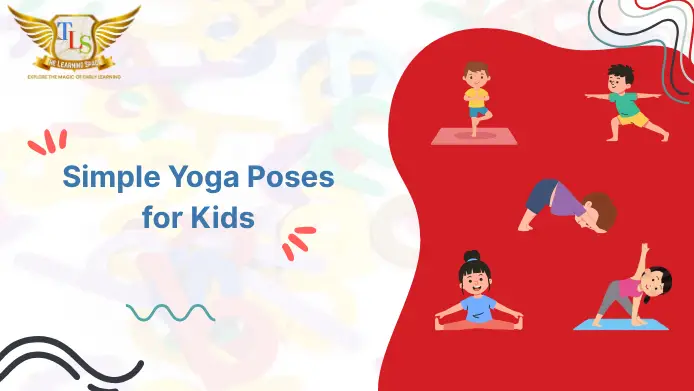
Fun and Simple Yoga Poses for Kids with Big Benefits

Yoga is one of the best ways kids can stretch, have fun, and relax at the same time. It keeps the body strong and the mind calm. These easy yoga postures for kids are not only pretty simple to pick up but also suit any age. So, let’s find some kids’ yoga poses whose names make the whole thing a lot of fun and a bit of a game too. Standing yoga poses for kids with names  With the help of these kids’ standing yoga poses, you will also help your child develop balance, strength, and body control. 1. Warrior Pose (Virabhadrasana) 2. Triangle Pose (Trikonasana) 3. Chair Pose (Utkatasana) 4. Tree Pose (Vrksasana) Sitting Yoga Poses for Kids with names  These seated yoga poses for children are tranquil and will also assist in relaxing their bodies and their minds. 1. Butterfly Pose 2. Easy Pose (Sukhasana) 3. Seated Forward Bend Animal Yoga Poses for Kids with names  These animal yoga poses for kids inspire the children as they get to imitate the movements of the animals. 1. Lion Pose 2. Cobra Pose 3. Frog Pose 4. Cat Pose Tips to Make Yoga Fun for Kids Conclusion Practicing yoga is very beneficial for children to keep them happy and healthy. Yoga poses that are simple and enjoyable can be the kids’ daily practice without any difficulties. Nowadays, more and more parents are introducing yoga in their children’s preschools in Noida and day care in Noida as a part of their daily routine to help the children become strong and calm. FAQ’s for simple yoga poses for kids What is the best age to start simple yoga poses for kids? Children can begin with simple and enjoyable poses as young as age 3 or 4 years. Can simple yoga poses for kids help with stress and anxiety? Yoga benefits children by calming and relaxing their minds and bodies. Are yoga poses safe for kids? Yes, yoga poses are very safe if done gently and under supervision. Can simple yoga poses for kids boost attention and focus? Certainly, regular yoga sessions help in enhancing kids’ ability to focus and concentrate. How often should kids practice yoga poses for best results? Practicing yoga 3 to 5 times a week is good for kids.

Simple and Fun maths activity for nursery class
Blog

Simple and Fun Maths activity for Nursery class

Learning numbers becomes enjoyable when it feels like a game instead of a chore. A good math activity for nursery class can make learning exciting and help children learn without pressure. At this stage of life, children learn best through games, colors, and physical activities. Even simple activities help children understand numbers. Parents and teachers can use fun ideas to teach counting and number recognition. These tiny and amazing activities contribute to children’s learning step by step. With the correct math activity for kids, even the youngest learners can take pleasure in math. Why Maths Activity is Important in Nursery Learning math at an early age prepares children for school. Using simple counting games, the children get to understand the concept of numbers, as well as discover shapes and patterns. A well-planned math activity improves children’s thinking and problem-solving skills. Fun activities make learning stress-free. Children enjoy learning when numbers appear in games. That is why many teachers use fun math games for kids to teach counting and number order. Many educators, therefore, seek new innovative methods for teaching numbers to kids when the time comes to think about how to teach numbers to kids. Top Amazing Maths Activity for Nursery Class Kids Here are some simple and engaging ideas for a maths activity for nursery class. 1. Number Flashcard Game Display brightly coloured flashcards showing numbers 1 to 10. Let kids shout out the number on the card. As an extra step, you can have them clap the corresponding number of times. 2. Counting with Everyday Objects Gather small things like toys, pencils, or fruits. Let the children count them slowly one by one. This math learning activity can turn numbers into tangible things for kids. 3. Number Hop Game Mark numbers on the floor with chalk or paper. Kids jump around from one number to another, counting as they go. 4. Number Matching Activity Give kids two kinds of cards. One has numbers, and the other has pictures. They have to find the correct set of items that goes with the number. 5. Number Puzzle Game Grab a bunch of number puzzles or make your own. Children piece together the puzzle piece that fits with the number. 6. Number Coloring Activity Distribute giant number coloring sheets among the children. They will get to paint the numbers. When the children are coloring the numbers, they can say them aloud. 7. Number Treasure Hunt Put number cards on different spots in the room. Children will enjoy this exciting number hunt. 8. Number Sorting Game Scatter number cards from 1 to 10 and challenge kids to sort them. This math activity helps them understand the number sequence. 9. Number Train Game Sketch a train with several boxes numbered within. Kids arrange the numbers in the correct order to complete the train. 10. Number Fishing Game Cut paper fish with numbers written on them. Children use a fishing rod toy to catch the fish and announce the number they have caught. Tips for Making Maths Activity Fun Here is the tips for making maths activity fun Conclusion Math can be like a game for little kids. A simple maths activity for nursery class is one of the best ways to get children to like math and also give them a solid foundation in math skills. By playing and experimenting with numbers, kids gain the skills and interest necessary for math. Several schools and a good Preschool in Noida offer creative maths activity for kids to teach counting in an enjoyable manner. While selecting a Day care in Noida, parents should consider those that use playful learning methods. FAQ’s of Simple and Fun Maths activity for nursery class How often should nursery children practice math activities? Children can play short math games daily for about 10–15 minutes. How do fun math activities help preschool learning? Exciting math games for kids are a great way to make kids learn math in a more pleasant way and, at the same time, help them to memorize numbers more quickly. At what age should children start learning math activities? Small kids are capable of learning the basics of counting from the age of two or three. Can math activities help improve a child’s confidence? Definitely. Kids who excel in number games feel great about themselves and their abilities. How long should a nursery math activity session be? To get kids really interested, a nursery math activity session could last 10-20 minutes.

Nursery Admission Interview Questions & Answers for Parents and Child
Blog

Nursery interview questions and answers for Child and parents

Nursery admission is an exciting step for both children and parents. Most schools require the child to answer simple nursery interview questions, enabling the school to understand the child’s basic skills, behavior, and attitude towards the new environment.  Why Do Pre-Schools Conduct Nursery Interviews? Preschools conduct nursery interviews to assess the child’s ability to communicate, their confidence, and their behavior.  Nursery Interview Questions and Answers for Child Simple nursery interview questions are asked of the child to assess their communication skills, attitude, and comfort in a new environment. 1. What is your name? The child should give their name correctly. For example: “My name is Aarav Sharma.” 2. How old are you? The child can give the correct age. For example: “I am four years old.” 3. When is your birthday? The child can say the date or the month of their birthday. For example: “My birthday is in June.” 4. What are your parents’ names? The child should give the names of both parents correctly. For example: “My father’s name is Raj, and my mother’s name is Pooja.” 5. Do you have any siblings? A simple answer will do in this case. For example: “Yes, I have a younger brother.” 6. Where do you live? The child can give the city or area where they live. For example: “I live in Noida.” 7. Can you count from 1 to 10? Teachers can ask the child to count the numbers from 1 to 10 correctly. 8. Can you say a rhyme? The child can recite any nursery rhyme, like Twinkle Twinkle Little Star. 9. Do you like to share your toys? A positive response will be suitable for this question. For example: “Yes, I like sharing toys with my friends.” 10. Who is your best friend? The child can give the name of the friend. Nursery Interview Questions and Answers for Parents Schools also ask nursery interview questions and answers for parents to understand the child better and learn about family support. 1. Tell us about your child. You may describe the nature, interests, and habits of the child in a few words. 2. Why do you want admission to this school? You may state the teaching style, safety, and importance given to the child’s early education. 3. Who spends the most time with the child at home? You may state the individual who spends the most time with the child. 4. How do you discipline your child? You may state that you discipline the child calmly. 5. Is your child comfortable interacting with other children? You may state if the child enjoys playing with other kids. 6. What are your child’s strengths? You may state the strengths of the child. 7. Is your child toilet-trained? You may state the toilet habits of the child. 8. What are your child’s weaknesses? You may state the weaknesses of the child. 9. How do you support your child’s learning at home? You may state the ways you support the child’s learning. 10. What are your expectations from the school? You may state the expectations you have of the school. Tips to Prepare for Nursery Interview It will help the child to feel more confident when answering the nursery interview questions. Self-Introduction Round You should practice the pronunciation of the child’s name, the child’s age, and the names of the parents with the child. It is important to make it more interesting to help the child feel comfortable. Verbal Expression & Language Skills You should have a conversation with the child every day. You should ask the child to speak in short sentences. Foundational Learning Concepts You should teach the child basic concepts such as counting numbers, colors, shapes, and animals. Interaction & Behavioral Skills You should teach the child to greet the teacher, to smile, to listen carefully, and to say thank you. Creative Thinking & Role Play You should engage the child in role-playing games. It will help the child to think, speak, and express better. Believe in Your Child’s Potential You should believe in the potential of the child. It will help the child to feel safe and relaxed. What mistakes should parents avoid during nursery interviews? Parents should always be calm and supportive during the nursery interviews. Conclusion Nursery interviews are informal and friendly conversations. With basic practice, children can easily answer the nursery interview questions for nursery admission confidently. Parents should always be calm and supportive during the nursery interviews. If you are looking for a reliable day care in Noida or a top-rated Preschool in Noida, choose a place that focuses on your child’s happiness and growth. A good school makes this first step in education feel like a fun and exciting journey. FAQ’s of Nursery interview questions and answers for kids and parents

Scroll to Top